
Alonna’s Journey: Advocacy with Hashimoto’s Disease
Key Takeaways
- Before Alonna was diagnosed with Hashimoto’s thyroiditis, the symptoms she experienced were dismissed for years, underscoring the importance of being heard in healthcare settings.
- Alonna has learned to manage Hashimoto’s through a trial-and-error approach, consistent monitoring, self-advocacy, and guidance from a trusted medical provider.
- After her diagnosis, Alonna still faced challenges due to misinformation and limited access to specialty care, but she turned those obstacles into motivation to educate herself and her peers.
- Alonna turned her diagnosis into purpose by pursuing leadership and advocacy roles through the Autoimmune Association, empowering other young adults living with autoimmune disease.
Battling Symptoms Before a Diagnosis
Well before she knew she had an autoimmune disease, Alonna dealt with health challenges like persistent fatigue throughout her teenage years. Unfortunately, what she was going through was often brushed aside and attributed to stress or simply growing up. At first, Alonna internalized those explanations, thinking that the weariness she felt might just be a normal part of adulthood.
Of course, managing school, work, and life transitions can be exhausting for young adults, but deep down, Alonna knew there was more to her story. However, she wouldn’t uncover the root of her health complications until she turned 18 and began working as a Certified Nursing Assistant (CNA) at a health clinic.
During her time as a CNA, Alonna was pleasantly surprised to meet a nurse practitioner (NP) who listened attentively to her concerns. The NP astutely ordered lab work to dig deeper into Alonna’s symptoms, something that hadn’t been done before. This decision marked a pivotal moment in Alonna’s health journey, as the results finally pointed to the underlying cause of her fatigue: Hashimoto’s thyroiditis and hypothyroidism.
Finally Having Clarity on Her Autoimmune Disease
Being diagnosed with a chronic disease can be overwhelming, but it can also bring clarity, as seen in Alonna’s story. After years of uncertainty, she finally figured out what she was dealing with.
Hashimoto’s thyroiditis is an autoimmune disease in which the immune system mistakenly attacks the thyroid, a butterfly-shaped, hormone-producing gland in the neck. Since the thyroid plays an imperative role in metabolism and other bodily functions, this hypothyroidism-causing autoimmune condition can cause unexplained weight fluctuations, joint and muscle pain, and the primary symptom that had plagued Alonna for so long: extreme fatigue.
Simply receiving the diagnosis didn’t erase Alonna’s symptoms overnight, but it gave them context and gave her direction. With this knowledge, she could finally take steps to manage her condition.
Learning to Manage Hashimoto’s Thyroiditis
Alonna’s Hashimoto’s diagnosis built her understanding of her health, but to successfully manage her thyroid conditions, she had to build her patience.
Learning to manage an autoimmune condition effectively can take a lot of trial and error, and Alonna learned this firsthand. It took her quite some time to find a treatment plan that truly improved her quality of life.
Before she could get there, she had to make countless adjustments to her approach and go through frustrating periods when symptoms didn’t quite match lab values—sometimes numbers looked “normal,” but Alonna still didn’t feel normal.
Rather than being discouraged by these challenges, Alonna actually put in more effort to find the relief she was looking for.
Taking the Reins of Her Health Journey
To take more initiative and find a management plan that worked for her, Alonna implemented intentional steps, such as:
- Paying attention to patterns and documenting symptoms using digital tools
- Educating herself using credible sources
- Asking qualified medical professionals thoughtful questions
- Building a true, long-term partnership with her healthcare provider
As she began championing her own health, Alonna grew to appreciate when her provider asks, “Did you see your lab values?” and “What do you think of them?” These simple yet powerful questions reinforce that her lived experience matters just as much as the numbers.
Prioritizing Consistency and Balance
Managing most autoimmune diseases requires structure and repeated actions. Three of the most important ways that Alonna has maintained consistency while living with Hashimoto’s are:
- Scheduling regular lab work for health monitoring
- Strictly adhering to the treatment plan
- Sticking to realistic lifestyle adjustments
Additionally, as many people do after an autoimmune diagnosis, Alonna explored different dietary approaches. She eventually found that balance that worked well for her. Instead of chasing restrictive trends or dramatic overhauls, she focused on sustainable habits. She used nutrition resources to build a balanced diet, stuck to healthy routines, and closely followed her medical provider’s treatment recommendations.

Navigating Challenges Along the Way
Even though she was steadily learning more about herself and autoimmune disease management, Alonna faced several obstacles after her diagnosis. Like many people living with autoimmune disease, she dealt with misinformation and care restrictions.
The Weight of Misinformation
After getting diagnosed with an autoimmune disease, Alonna encountered an overwhelming amount of misinformation online. Even though Hashimoto’s cannot be cured or reversed at this time, she was being thrown alleged miracle solutions and extreme diets that she had to sift through.
The sheer volume of “cures” that Alonna had to navigate left her confused and discouraged at times. It became difficult to distinguish evidence-based recommendations from those grounded in anecdote and hype.
Over time, Alonna developed a critical lens, learning to look for credible sources, peer-reviewed research, and providers who referenced evidence rather than trends. This shift in mindset ultimately restored her confidence and enabled her to understand autoimmune diseases better.
Access to Specialty Care
Since Alonna has lived in a rural area, another challenge for her has been accessing the medical care she needs. Being two hours away from the nearest endocrinologist makes it unfeasible to see a specialist regularly.
Alonna shares this struggle with many patients. In fact, geographic barriers significantly impact medical care for approximately 3.6 million Americans every year.
Refusing to let distance keep her from progressing, Alonna prioritized working closely with her nurse practitioner. Together, they built an effective and supportive partnership, reinforcing that quality care is not defined solely by title, but by listening and collaborative decision-making.
Turning Diagnosis into Purpose
Living with an autoimmune disease while pursuing nursing and patient advocacy has helped define how Alonna understands healthcare. It has stoked the fire inside her, further fueling her passion to help others.
Joining the Young Adult Advisory Council
Alonna’s diagnosis did not limit her; instead, she channeled it into a sense of purpose. She found community and unique opportunities through the Autoimmune Association, serving two terms on the Young Adult Advisory Council (YAAC), including as an inaugural member.
During her time with YAAC, she led social media outreach and grew the YAAC Instagram account by 200%. Her passion and hard work amplified the voices of young adults living with autoimmune conditions and expanded awareness to new audiences.
Meeting with Congress
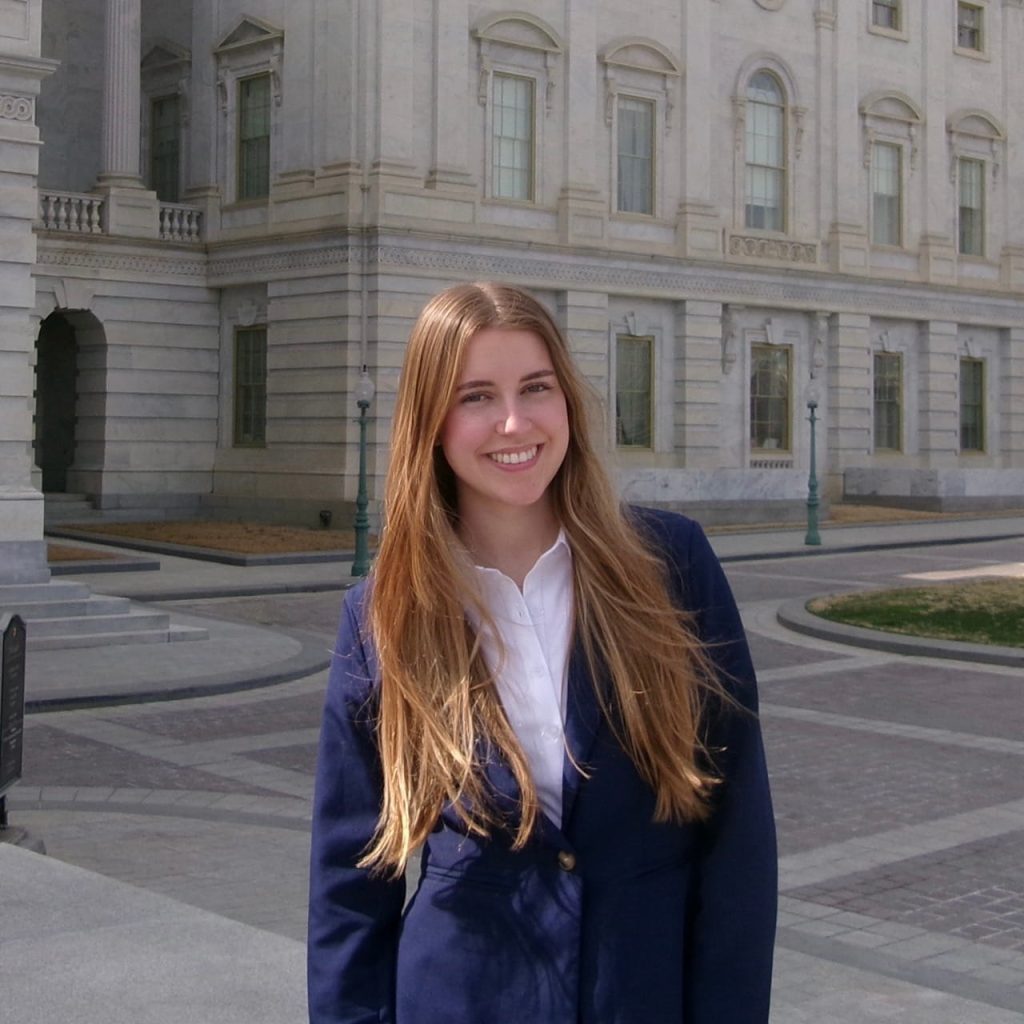
Alonna also participated in the Autoimmune Association’s 2025 Legislative Fly-In. During this time, she met with members of Congress to advocate for autoimmune research and policy priorities. That experience had a lasting impact, shaping Alonna’s academic focus and guiding her toward nonprofit administration and advocacy.

Learning Through Hands-On Experiences
Later, Alonna completed an internship with the Autoimmune Association, which was an effective way for her to integrate her studies with hands-on advocacy experience. What began as an overwhelming diagnosis evolved into impressive leadership.
Taking on these roles did more than just build Alonna’s resume; they gave her community, connection, and perspective. They gave her a more comprehensive view of how autoimmune disease affects millions of Americans and showed that raising awareness can shape research, policy, and, ultimately, outcomes.
Through her work with student organizations focused on autoimmune awareness, including efforts at her university, Alonna saw how powerful community can be.
People share tips → We learn from each other → We all feel less alone
Sometimes, people can even discover symptoms in themselves that prompt earlier care.
Advice to Others Living with Autoimmune Conditions
As she continues to manage her thyroid conditions, Alonna has compiled practical and empowering advice. Four of the most important things she thinks someone living with an autoimmune condition should do are:
- Educate yourself using credible sources – Understanding your condition can reduce fear and uncertainty and give you a sense of control in situations that can otherwise feel overwhelming.
- Find a healthcare provider who listens – A good partnership is at the core of a satisfactory care experience. So, you should focus on finding the right doctor who values your perspective, reviews labs with you, and invites your input.
- Document your symptoms – Patterns may tell you important stories. Therefore, you should write down what you feel and when, to guide treatment decisions and validate your experience.
- Stay grounded in sustainable strategies – Rely on balanced nutrition, consistent routines, and treatment adherence, as stability is usually more helpful than abrupt, extreme interventions.
Most importantly: your voice matters. Follow in Alonna’s footsteps and speak up in healthcare settings to get the care you need.
Turning Challenges into Impact
Autoimmune disease can reshape life, but it can also deepen empathy, strengthen resolve, and clarify priorities. Despite the challenges presented by Hashimoto’s, Alonna’s story is not defined by fatigue or lab values; it is defined by initiative and genuine care.
She transformed her diagnosis into an opportunity to educate herself, support others, and advocate for systemic change. Alonna demonstrates that passion and purpose matter more than experience alone, especially for young adults navigating chronic illness.
For those inspired by Alonna and wondering how to get involved, remember that advocacy can take many forms. Some great places to start are:
- Sharing your story online and in person
- Joining patient advisory councils
- Participating in awareness campaigns
- Engaging with research initiatives

Get Support So You Can Eventually Give it
Alonna’s journey is still in motion, but it has already become a beacon of strength, growth, and hope. Her turn toward advocacy reminds us that challenges can reveal potential rather than erase it. Still, you may need assistance with managing your autoimmune disease before you can fully commit to assisting others in the way that Alonna does.
If you or a loved one has been trying to manage an autoimmune disease like Alonna, the Autoimmune Association can help you access resources and find support groups. We can also give you the information and connections needed to advocate for autoimmune research and policy advancements.
You don’t need experience to get involved and make a difference; you just need passion.
Join our email list
Receive the latest blog articles, news, and more right to your inbox!
Related articles you might be interested in

How Zuha Refused to Let Lupus Write Her Story
AJ’s Journey: Finding Answers After Years of Uncertainty
Aliana’s Journey: Living with MS and Finding Community
Hillary’s Journey: Living with Lupus and POTS
Find more resources on autoimmunity
Learn more about autoimmunity, diagnosis tips, how to find a physician, and more.