
How the Exposome May Influence Autoimmune Disease
Key Takeaways
- Exposome definition – The exposome is the total collection of environmental exposures a person experiences throughout their entire life, beginning before birth and continuing into adulthood.
- How autoimmune diseases develop – Researchers believe autoimmune diseases develop due to a complex interaction between genetics and lifelong environmental exposures, rather than a single cause.
- Ongoing research – To improve risk prediction, scientists are exploring how environmental factors such as infections, air pollution, diet, medications, stress, and the gut microbiome influence immune system function over time.
Beyond Genetics: Understanding the Exposome
When discussing autoimmune diseases, the topic of genetics often comes up, and for good reason, as inherited genes have been proven to influence a person’s risk of developing different autoimmune diseases. However, genes alone generally do not determine whether someone will develop a condition. Researchers believe most autoimmune diseases arise through complex interactions among genetic susceptibility, environmental exposures, and changes in immune function over time.
To get more clarity on this, researchers are looking at autoimmune diseases’ connection to the exposome. Epidemiologist Dr. Christopher Wild introduced the concept in 2005 to complement the human genome. The exposome encompasses the totality of environmental exposures a person experiences from conception throughout life, including factors related to where people live and work, what they eat and do, and the physical, chemical, and social environments around them.
The guide below explains this concept in more detail and covers noteworthy exposome news so you can stay up-to-date as researchers continue studying the interaction between genetics, the immune system, and the exposome to understand why autoimmune diseases develop and how they might one day be prevented.
What Counts as the Exposome?
The exposome is much broader than exposure to a single chemical or environmental toxin. Instead, it encompasses nearly every external factor a person encounters throughout their entire life, as well as the body’s biological responses to those experiences.
External Environmental Exposures
The table lists some examples of external exposures that occur throughout daily life, broken up into three separate categories.
| Category | Examples |
| Air & Environmental Quality |
|
| Lifestyle & Daily Habits |
|
| Medical & Health Exposures |
|
Many of these exposures are unavoidable, while others vary depending on where a person lives, works, or spends time. Importantly, the exposome recognizes that these factors do not occur in isolation. Instead, people experience thousands of exposures simultaneously throughout their lives.
Internal Biological Responses
The exposome also includes how the body responds to the previously mentioned environmental exposures. For example, exposure to air pollution or an infection may trigger inflammatory responses, or long-term stress can influence hormone levels and immune signaling, all of which fall under the exposome’s umbrella.
Scientists are increasingly studying these internal biological changes alongside external environmental exposures to better understand how they may contribute to autoimmune disease development. Some examples of biological processes that researchers are particularly interested in are:
- Chronic inflammation
- Oxidative stress
- Hormonal regulation
- Metabolic changes
- Immune activation
All five of these processes are features of the internal exposome. However, they can have varying effects on individuals, and they may help explain why similar environmental exposures affect people differently. Studying these differences may help researchers understand why people can respond differently to similar exposures.
Three Things to Remember About the Exposome
Now that you know what constitutes the exposome, you should keep the following three facts in mind before specifically learning about the impact of the environment on autoimmune disease.
1. The Exposome Changes Throughout Your Life
Unlike genetics, which remain largely unchanged throughout life, the exposome is constantly evolving—environmental exposures that begin before birth may differ from those that are experienced throughout childhood, and they will continue to change through adolescence and adulthood.
Some factors that may contribute to a continuously changing exposure profile are:
- Where someone lives
- Their occupation
- Evolving dietary habits
- Infections or medication use
- Stress levels and overall health
The factors above change as you get older, but age may play its own independent role as well. Certain life stages, including fetal development, childhood, and adolescence, may represent periods when the immune system is particularly sensitive to environmental influences. Understanding when specific exposures occur could become just as important as understanding which exposures occur.
2. No Two Exposomes Are Alike
Because each person’s experiences and biological responses change throughout life, exposome profiles can differ considerably between individuals. Even identical twins, who share nearly identical DNA, may accumulate different environmental exposures and develop different biological responses over time. Researchers study twins who differ in autoimmune disease status to explore how environmental, epigenetic, and other nongenetic factors may contribute to disease development.
3. The Immune System Responds to Many Environmental Exposures
A balanced immune system continually interacts with the world around it. Every day, it encounters viruses, bacteria, allergens, pollutants, medications, and countless other environmental factors, and its job is to protect the body. Depending on the exposure, the immune system may mount a protective response, tolerate the substance, or, in some cases, produce an excessive or misdirected response.

How Environmental Exposures May Affect the Immune System
Scientists are investigating whether certain environmental exposures, particularly when combined with genetic susceptibility, may contribute to immune system changes that increase the risk of autoimmune disease. The areas of research below represent several areas of focus.
Immune Tolerance
One of the immune system’s most important jobs is distinguishing between harmful invaders and the body’s own healthy tissues. This is a process known as immune tolerance, and it helps prevent autoimmunity, the umbrella term for immune system malfunctions where the body’s immune system mistakes its own healthy cells and tissues as harmful and attacks them. When this tolerance breaks down, the immune system may react against itself in a process known as autoimmunity. Autoimmune disease occurs when this immune activity results in tissue damage, inflammation, or impaired organ function.
Researchers are studying which environmental exposures may disrupt normal immune regulation in susceptible individuals. For example, tobacco smoke induces and alters immune responses in the lungs and triggers inflammation. Some infections, air pollution, and some occupational exposures have also been associated with changes in immune activity or inflammation.
However, the relationship between environmental exposures, immune tolerance, and autoimmune disease is highly complex. An exposure associated with one autoimmune disease may have little or no relationship to another, and most exposures alone are not thought to cause autoimmune disease by themselves. Instead, researchers increasingly believe multiple environmental factors may interact with genetics over many years before disease develops.
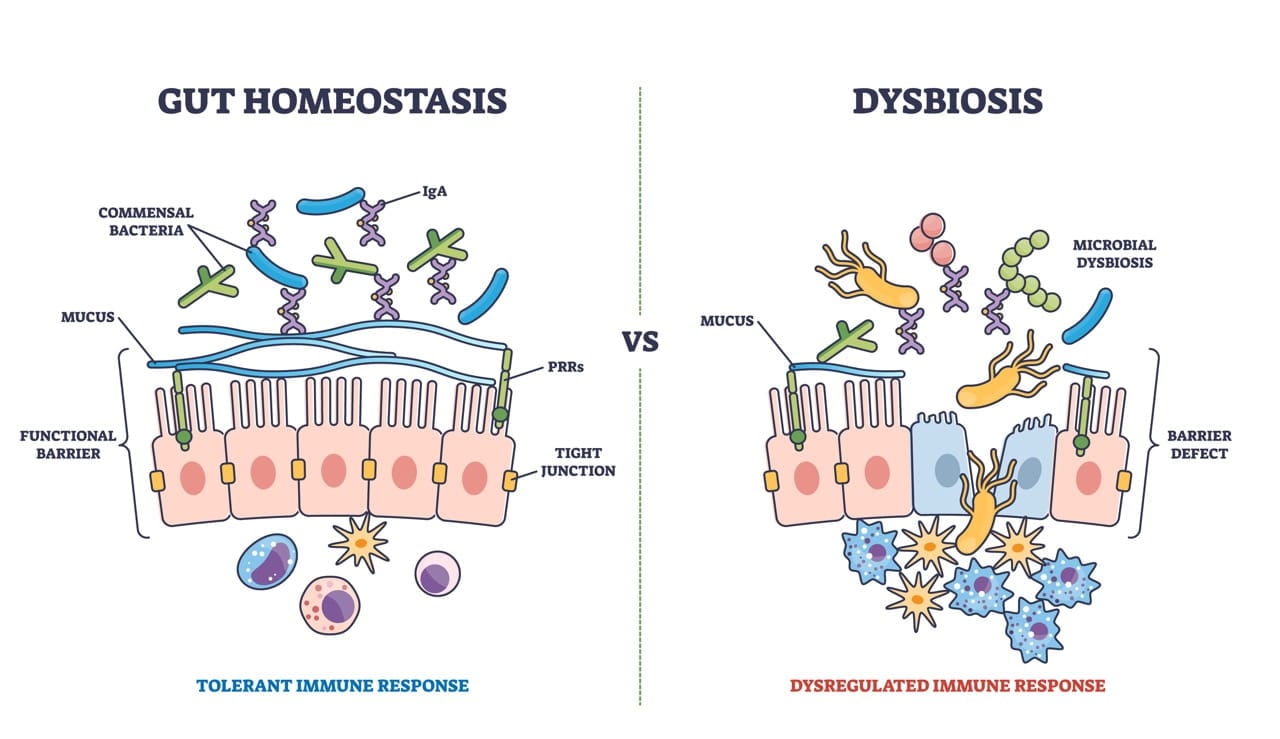
The Gut Microbiome
Another rapidly growing area of exposome research involves the gut microbiome. The trillions of bacteria, viruses, fungi, and other microorganisms that naturally live within the digestive tract play an important role in digestion, metabolism, and immune system development.
Changes in the composition of gut microbes can lead to an unhealthy imbalance of microorganisms in the body, commonly known as dysbiosis. Researchers have found associations between gut dysbiosis and several autoimmune conditions, including:
- Rheumatoid arthritis
- Multiple sclerosis
- Inflammatory bowel disease
- Type 1 diabetes
Researchers are now working to answer a critical question: do changes in the microbiome contribute to autoimmune disease development, or do they occur because the disease has already begun?
The relationship is believed to be bidirectional. In other words, alterations in the microbiome may influence immune function while inflammation associated with autoimmune disease may also change the microbiome itself. Additional research is needed before scientists fully understand how these interactions affect disease risk.
Epigenetics and Gene Expression
The exposome may also influence health through epigenetics, which refers to changes in how genes are turned on/off without changing the underlying DNA sequence.
Unlike inherited genetic mutations, epigenetic changes can be influenced by environmental factors throughout life. Smoking, air pollution, diet, and infections may alter chemical markers that regulate gene activity and also have an impact on epigenetic processes.
Although epigenetics has become one of the most promising areas of autoimmune research, scientists are still working to determine which changes are most important, when they occur, and whether they can eventually be modified to reduce disease risk.
Why Autoimmune Disease Is Rarely Caused by One Thing
One common misconception about autoimmune disease is that it can be traced to a single cause. Genetic variations can increase a person’s susceptibility, but for most autoimmune diseases, genes alone do not determine who will develop a condition.
Population-based studies of multiple sclerosis in twins illustrate this complexity. Identical twins share nearly all their DNA, yet one twin may develop multiple sclerosis while the other does not. At the same time, identical twins are more likely than fraternal twins to share the disease. These findings indicate that both genetic and nongenetic factors contribute to disease risk.
Rather than searching for one definitive trigger, researchers believe autoimmune diseases develop through the cumulative interaction of things like:
- Genetic susceptibility
- Environmental exposures
- Immune system changes
- Other biological changes that occur across the lifespan
This complexity helps explain why autoimmune diseases are difficult to predict and why no single exposure has been shown to cause most autoimmune conditions.
The Goals of Studying the Exposome for Autoimmune Disease Research
Today, scientists are using increasingly sophisticated technologies to measure environmental exposures alongside biological markers, creating a more complete picture of how genetics and the environment interact and affect the immune system throughout life. The two goals below drive this endeavor.
Identifying Risk Earlier
One of the most prominent goals of exposome-related autoimmune disease research is identifying individuals who may be at increased risk before irreversible tissue or organ damage occurs.
To better understand how autoimmune diseases develop during their earliest stages, scientists are investigating combinations of biological markers and risk information, including things like:
- Autoantibodies
- Inflammatory proteins
- Genetic risk factors
- Metabolic changes
- Environmental exposure histories
This work builds on discoveries in diseases such as type 1 diabetes, where the detection of multiple islet autoantibodies can identify people at high risk before clinical symptoms appear. Similar approaches combining biomarkers and other risk factors are being investigated in additional autoimmune diseases.
Moving Toward Precision Prevention
Researchers hope that a better understanding of the interactions among genetics, environmental exposures, and biological responses will eventually support more personalized prevention strategies.
Rather than applying the same recommendations to everyone, future approaches may allow healthcare providers to identify individuals with particular combinations of risk factors and biological markers to develop interventions suited to their individual circumstances.
What the Exposome Means for People Today
Even if you have a higher likelihood of developing an autoimmune disease due to your family’s autoimmune history, it is best to focus on facts rather than fear.
The exposome is helping researchers better understand how environmental exposures, genetics, and immune function interact over a lifetime. However, it cannot currently predict who will develop an autoimmune disease. So, be cautious of claims that promise to identify one cause or prevent disease by eliminating a single exposure.
Don’t put your energy into fear; put it into making healthy lifestyle choices and staying in close contact with a qualified healthcare professional to support your overall wellness and immune health.
Build Healthy Habits
While many exposures are outside our control, you can actively shape and improve your exposome to support your overall health. Some health habits to focus on are:
- Using nutrition resources to build a balanced diet
- Staying physically active within your abilities
- Prioritizing quality sleep
- Managing stress in healthy ways like meditation
- Avoiding tobacco products
- Keeping up with preventive healthcare
These habits cannot guarantee prevention of autoimmune disease, but they may reduce risk factors linked to chronic conditions.

Partner With Your Healthcare Provider
Finding the right healthcare provider and openly communicating with them is also key. Although healthcare providers cannot measure or interpret a person’s complete exposome, information about relevant environmental and occupational exposures may help them better understand symptoms and possible health risks. To get the most out of the doctor-patient relationship, you should share relevant information with them, such as:
- Family history
- Occupational exposures
- Infections
- Medication use
- Ongoing symptoms
As more exposome research emerges, this topic may offer new insights into autoimmune disease. For now, evidence-based information and openly communicating with your healthcare professional remain key.
A Broader View of Autoimmune Disease
The exposome offers a broader way of thinking about autoimmune disease by recognizing that health is shaped by far more than genetics alone. Every person experiences a unique combination of environmental exposures that may influence immune system function over time.
While scientists have made remarkable progress, many important questions remain unanswered. Researchers are still working to understand which environmental exposures matter most, when they have the greatest impact, and how they interact with one another across different autoimmune diseases.
The Autoimmune Association remains committed to sharing evidence-based education, including the latest exposome news as research continues to advance. We hope that one day exposome research can help identify people at higher risk earlier, support more personalized approaches to care, and inform new prevention strategies.
Subscribe to our monthly Research Roundup newsletter to stay in the loop on the latest developments regarding autoimmune diseases and relevant exposome news.
Join our email list
Receive the latest blog articles, news, and more right to your inbox!
Related articles you might be interested in

Understanding Autoimmune Biomarkers and Lab Results
The Autoimmune Prodrome: Before Symptoms Begin
Clinical Trials: What Patients Need to Know
Hormones, Perimenopause, Menopause & Autoimmune Disease
Find more resources on autoimmunity
Learn more about autoimmunity, diagnosis tips, how to find a physician, and more.