
Autoimmune Awareness Month: Why Awareness Matters
 Join Us This March
Molly Murray, President and CEO, Autoimmune Association
Every March, Autoimmune Awareness Month shines a light on a group of diseases that are often misunderstood, underdiagnosed, and overlooked. Affecting 50 million Americans and many more worldwide, autoimmune diseases are not going away anytime soon. In fact, they are one of the fastest-growing public health challenges of our time. And they remain severely underfunded, underrecognized, and underprioritized.
Raising awareness is not symbolic. It is strategic. Awareness drives research, improves diagnosis, strengthens advocacy, and builds community. Ultimately, awareness saves lives.
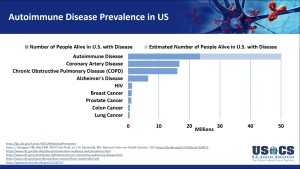
Autoimmune Disease Is More Common Than Heart Disease, Cancer, and Alzheimer’s
The numbers tell a powerful story. Approximately 50 million Americans are living with an autoimmune disease — far surpassing the prevalence of coronary artery disease, COPD, Alzheimer’s disease, HIV, or individual cancers like breast, prostate, colon, and lung cancer. Despite affecting more people than many high-visibility diseases, autoimmune conditions receive far less attention and research investment.
Autoimmune Disease Is a Growing Public Health Crisis
Autoimmune disease is not only widespread; in fact, it is increasing at an alarming rate. Globally, autoimmune disease incidence is rising by an estimated 3–12% each year. In the United States, one of the most concerning trends is the surge in biomarkers of autoimmunity among young people.
Antinuclear antibodies (ANA), a key marker of autoimmune activity, have increased nearly 50% in the U.S. in under 30 years. Among teenagers, that increase is closer to 300%. These trends point to a growing crisis with long-term implications for individuals, families, and the healthcare system.
Autoimmune diseases also tend to cluster. About 25% of patients with one autoimmune disease will go on to develop additional autoimmune conditions, adding complexity, cost, and burden to their care.
The Autoimmune Diagnosis Journey: Too Long, Too Costly
One of the most urgent reasons we raise awareness is the diagnostic delay faced by people with autoimmune disease. On average, patients see six doctors over four years before receiving an accurate diagnosis.
During that time, symptoms may worsen, disease progression may accelerate, and irreversible damage can occur. Many autoimmune symptoms are easily dismissed or misattributed, particularly when lab results are inconclusive in early stages.
Greater awareness helps people recognize symptoms sooner, advocate for themselves more effectively, and seek specialized care earlier, leading to better outcomes and improved quality of life.
What Raising Awareness Leads To: Research, Progress, and Hope
Increased Research and Innovation in Autoimmune Disease
Awareness fuels research. When autoimmune disease is visible, it attracts attention from researchers, funders, and policymakers. That attention leads to investment, and investment drives discovery.
Currently, there is no cure for any autoimmune disease. Treatments largely focus on managing symptoms or suppressing the immune system, sometimes with serious side effects. Research is needed to uncover root causes, identify reliable biomarkers, develop targeted therapies, and explore prevention strategies.
Breakthroughs in genetics, immunology, and technology hold enormous promise—but only if we prioritize autoimmune research at a scale that matches its impact.
Earlier Diagnosis and Better Patient Outcomes
Awareness doesn’t just change policy; it changes lives. When people understand autoimmune disease, they are more likely to recognize warning signs and seek care sooner. When healthcare providers are better informed, diagnoses are faster and more accurate.
Earlier diagnosis can mean less disease progression, fewer complications, and a better long-term outlook. It can also reduce the emotional toll of being misdiagnosed or told that symptoms are “all in your head.”
Stronger Advocacy and Policy Change
Awareness creates momentum for advocacy. It empowers patients and advocates to speak up and push for policies that improve access to care and increase research funding.
Advocacy has already helped advance federal attention to autoimmune disease, including the creation of the Office of Autoimmune Disease Research in the Office of Women’s Health (OADR-OWH) at the National Institutes of Health (NIH), and the development of the NIH-Wide Strategic Plan for Autoimmune Disease Research. Continued awareness is critical to turning plans into sustained action.
Community, Connection, and Support
Living with autoimmune disease can be isolating, especially when symptoms are invisible. Awareness helps people find each other. It builds community, reduces stigma, and reminds individuals that they are not alone.
A connected community shares knowledge, supports mental and emotional well-being, and strengthens collective advocacy. Awareness creates space for patient voices to be heard and valued.
Why Autoimmune Awareness Month Matters—Now More Than Ever
Autoimmune Awareness Month is not just about education for one month a year. It’s about accelerating progress toward better diagnosis, better treatments, and ultimately, cures.
With rising incidence, growing impact on younger populations, and persistent gaps in research and care, we cannot afford to remain silent. Awareness is the foundation for everything that follows.
How You Can Make a Difference During Autoimmune Awareness Month
Everyone has a role to play. Whether you live with autoimmune disease, care for someone who does, or simply want to support progress, your voice matters.
You can:
- Share credible information about autoimmune disease
- Start conversations with friends, family, and colleagues
- Support or participate in our awareness campaign
- Advocate for increased research funding
- Raise funds and hope through a Do-It-Yourself fundraiser
Make March matter. See all the ways you can help drive earlier diagnosis, better care, and stronger advocacy. → Make an Impact
And there’s another powerful way to help: Make a meaningful donation. Your gift directly fuels research, education, and advocacy that drive earlier diagnosis, better care, and stronger support for millions of people.
Small actions, multiplied across a community, create meaningful change.
Turning Awareness into Action
At the Autoimmune Association, we believe awareness is a catalyst—not the end goal. With increased visibility, stronger advocacy, and bold investment in research, we can change the trajectory of autoimmune disease.
Autoimmune Awareness Month is a reminder that progress is possible. Together, we can build a future with faster diagnoses, more effective treatments, and hope for millions of people living with autoimmune disease.
Join our email list
Receive the latest blog articles, news, and more right to your inbox!
Related articles you might be interested in
The Autoimmune Association Announces 2026 Young Adult Advisory Council
The Autoimmune Association Announces New Leadership for Board of Directors
The Hidden Workforce Impact of Autoimmune Disease on Women
Autoimmune Association Backs PBM Reform Bill
Find more resources on autoimmunity
Learn more about autoimmunity, diagnosis tips, how to find a physician, and more.